
We got a call for an active drip on a tile roof in Coquitlam. The water was not coming through the tiles. It was running out of the hidden gutter, and when we got up there the cause was the drain.
Why a hidden gutter drain is worth getting right
A hidden gutter, also called a built-in or box gutter, is a trough built into the roof itself instead of hung off the fascia. On this house the concrete tile roof sheds into it, and the trough is lined with an EPDM rubber membrane. It looks good from the ground because there is no gutter hanging off the edge, but there is a trade-off. A hung gutter that fails drips down the outside of the house where you can see it. A hidden gutter that fails puts water into the roof.
How much trouble that causes depends on what is underneath. This gutter runs over an overhang, so the water found its way out under the overhang instead of into the house, and that is how the homeowner noticed it. That is the lucky version. Where there is no overhang, or where the hidden gutter runs above living space, the same failure puts water inside the building, and usually nobody finds out until there is a stain on a ceiling.
Either way, the whole system rests on two details: the seams and the drains. On this roof it was a drain.
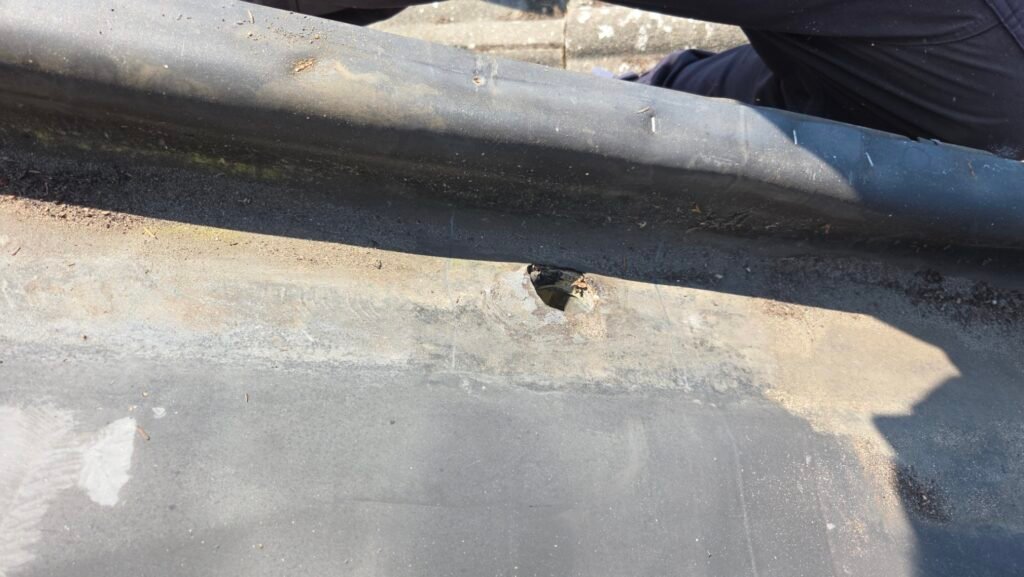
The drain was built in the wrong order
Here is how it had been done. The copper drain went down first. Caulking was applied on top of the copper flange. Then the rubber membrane was laid over the caulking.
That seems reasonable if you think a roof works by being sealed up, but it ignores what rubber does. EPDM expands and contracts with temperature, every day of the year, and copper does not move with it. The only thing joining the two is a bead of caulking, and it gets worked back and forth until it lets go.
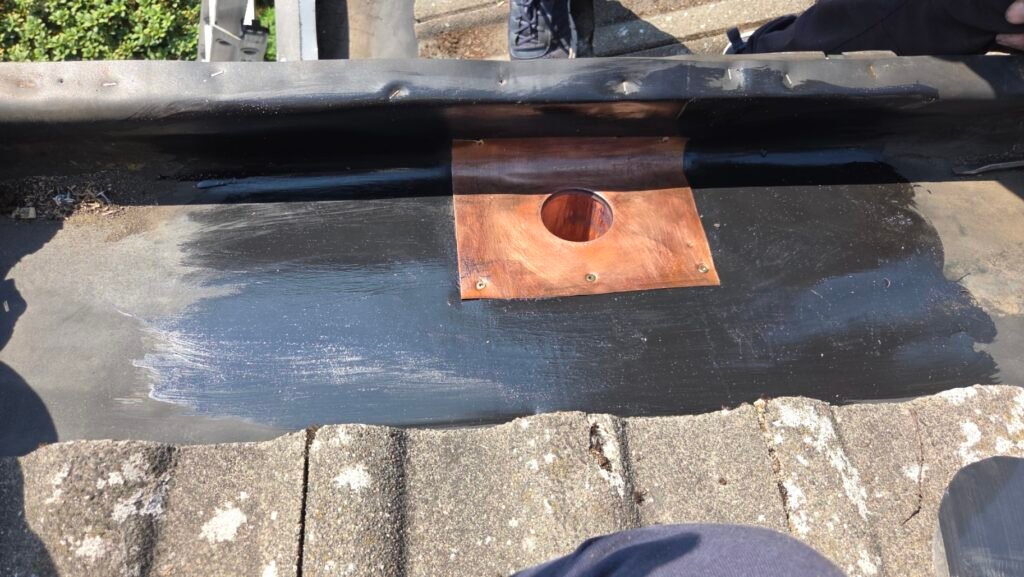
Once the membrane is unbonded from the flange, water running down the gutter does not drop into the drain. It runs around the outside of the flange and into the roof. We cut the membrane back to expose the flange so we could pull the old drain out, and you can see how little of it was still stuck down.
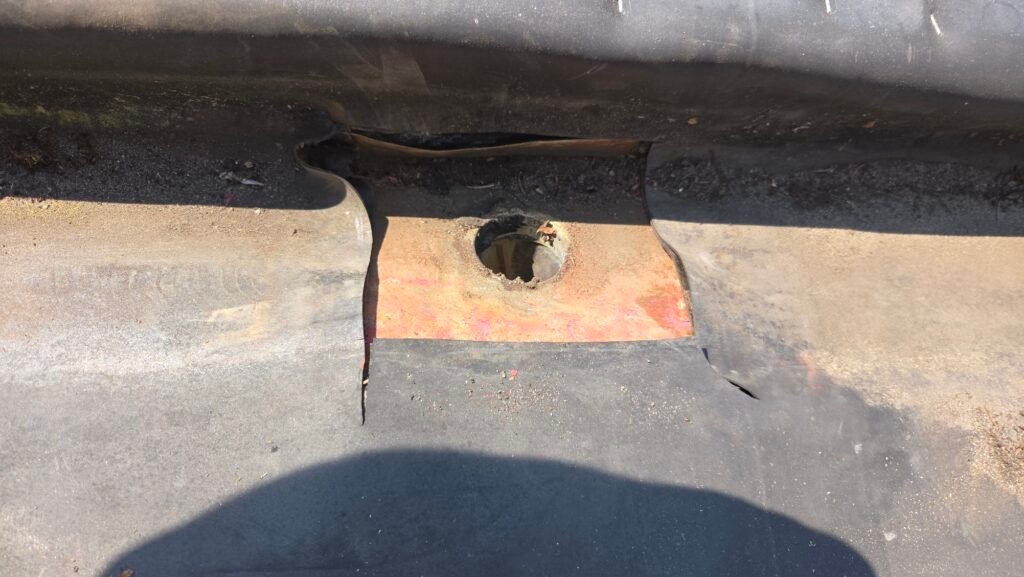
Two inch out, three inch in
The old drain was a two inch. We put in a three inch. A hidden gutter collects everything the tile roof sheds, all of it funnelling down to one small opening, and a two inch outlet plugs up fast. A three inch takes a lot more debris before it blocks, which keeps the water moving through instead of backing up and spilling over the side of the gutter.
Most people assume the downspout has to be changed as well. It does not. A three inch drain fits a standard two by three downspout, so on most hidden gutters this upgrade can be done without touching the downspouts at all.
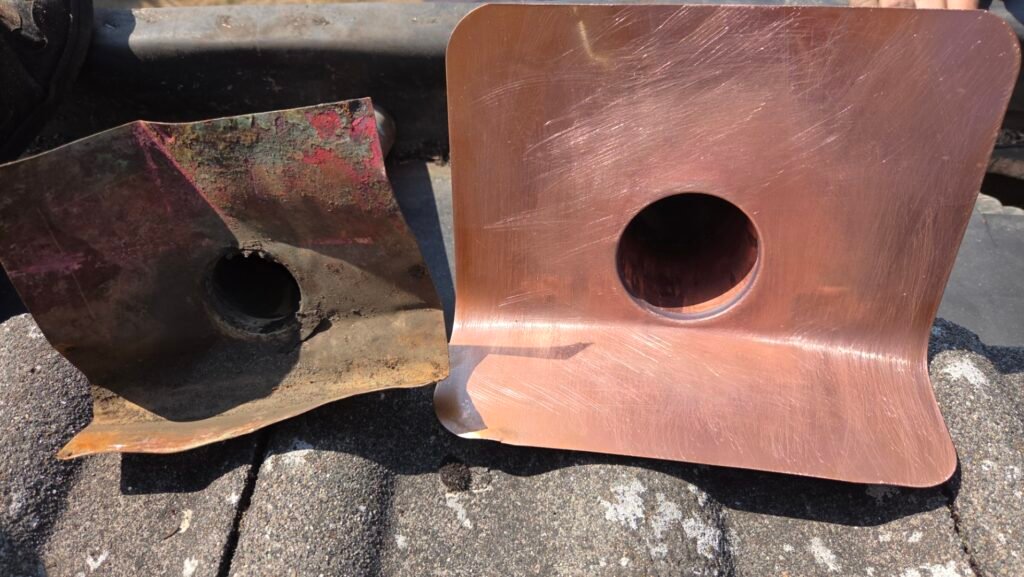
How we rebuilt it
This repair lives or dies on the bond, which means it lives or dies on the prep. We cleaned the existing membrane thoroughly around the drain first. Glue on a dirty membrane is just a slower version of the same failure.
Then the new three inch drain was fastened down on top of the membrane. That is the change that matters. With the copper flange sitting on top of the rubber, the flange holds the membrane down. The old way asked a bead of caulking to do that job, and caulking is not a fastener.
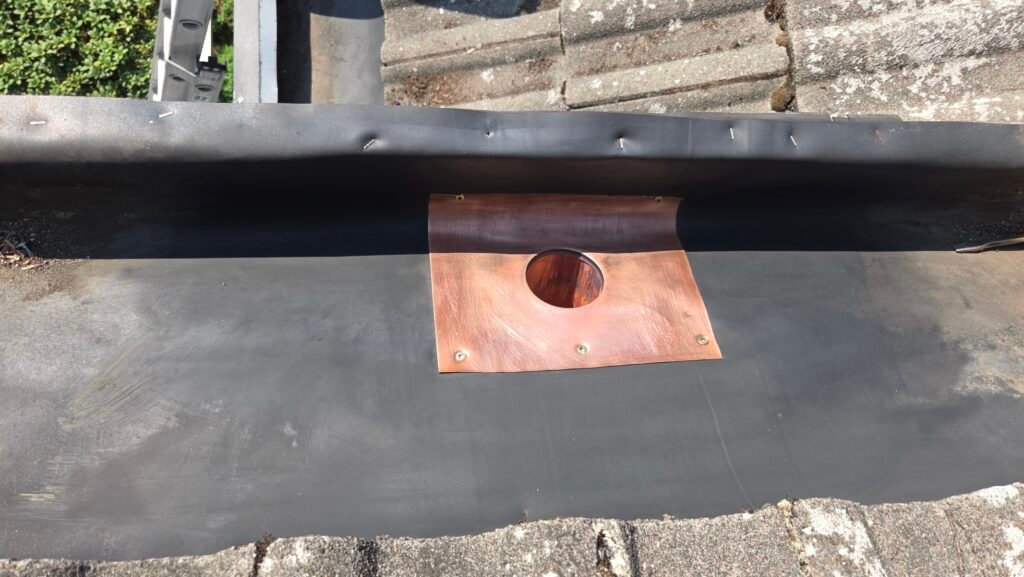
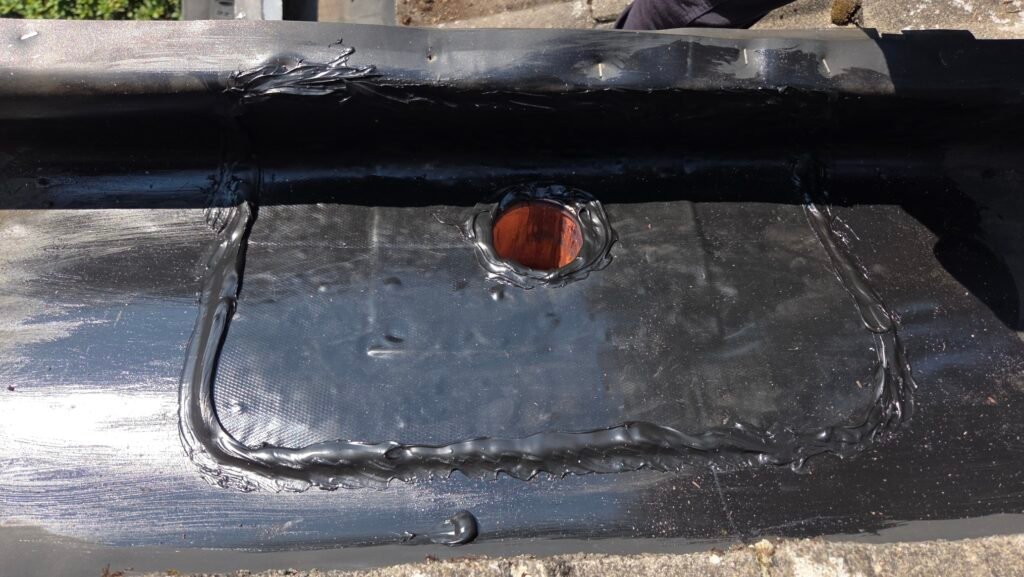
Next we brushed the proper bonding adhesive across the cleaned membrane and around the drain.
Last, the patch went over the top and lap sealant was run around every edge. The patch is rubber bonded to rubber, so it expands and contracts along with the membrane underneath it. Nothing is being pulled against something that will not move with it, and that is the whole reason the original detail failed and this one will not.
We use Elevate premium membranes for these patches. That is a commercial EPDM roof system. If a building owner trusts it to keep the water out of an entire commercial roof, it is more than good enough for a hidden gutter. Every patch we do carries a five year warranty.
What to watch for on your own hidden gutter
If your house has a hidden gutter, these are worth a look before the wet season:
- Whether the drain is actually clear. These gutters are built on the rafters with almost no slope to them, so some standing water is normal and not a problem by itself. Water that never goes down is.
- Debris piled up around the outlet, especially under overhanging trees.
- Caulking visible around a drain flange. Caulking is not what is supposed to be holding a drain in.
- Any staining on the soffit, the fascia or a ceiling near the eaves.
While we were on this roof the homeowner had us upgrade the rest of the drains and seal the seams as well, which is the sensible way to handle it. If one drain was built this way, the others were built the same way on the same day by the same person.
Hidden gutter repair in Coquitlam
Hidden gutters are common on tile roofs across Coquitlam and the rest of the Lower Mainland, and the drains are the first thing we check when one of them leaks. If you have a drip you cannot trace, or you just want the drains and seams looked at before the rain sets in, we can take a look.
More on hidden and built-in gutter repair, on concrete tile roof repair, or see the roofing work we do in Coquitlam.