
Field report · Coquitlam, BC
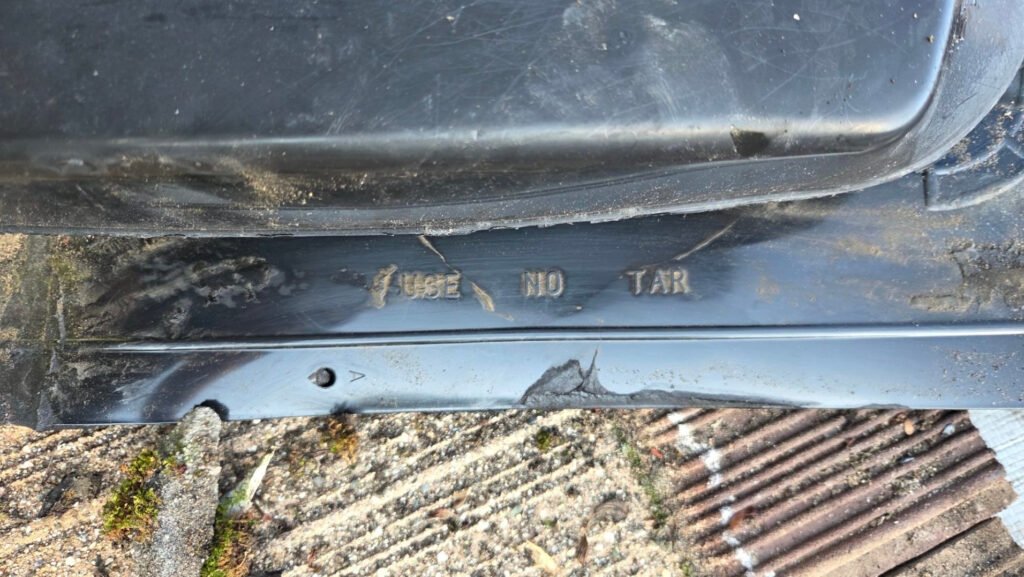
So they used tar.
A leaking plastic roof vent on a concrete tile roof, sealed with the one product its own maker casts a warning against.
A leak call in Coquitlam. On a tile roof the vents are the first thing we check.
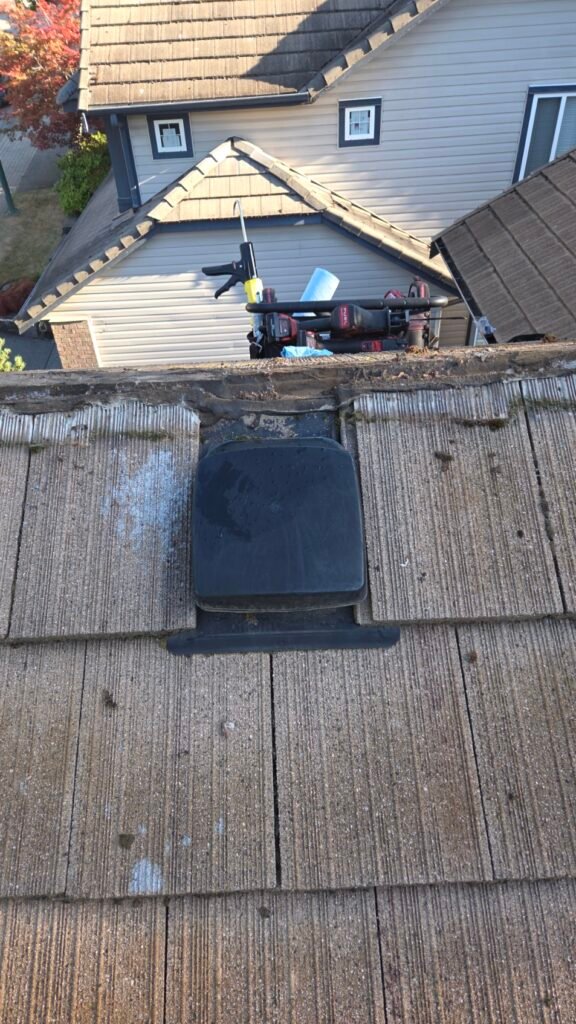
There was no smoking gun. The vent was plastic, bedded to the tiles in black roof mastic with more mastic pushed into the joint, and that is how nearly all of them go in. Nothing about it looked out of the ordinary. We had to lift a field tile before we could see the flange properly, and even then it looked like every other plastic vent on every other tile roof.
That is the point. Nobody botched this one. It was built the way they are all built, and there are three separate things wrong with that. The first is what mastic actually sticks to. It grabs concrete and holds. It does stick to the plastic, just nowhere near as well, and not for as long.
The tar lets go
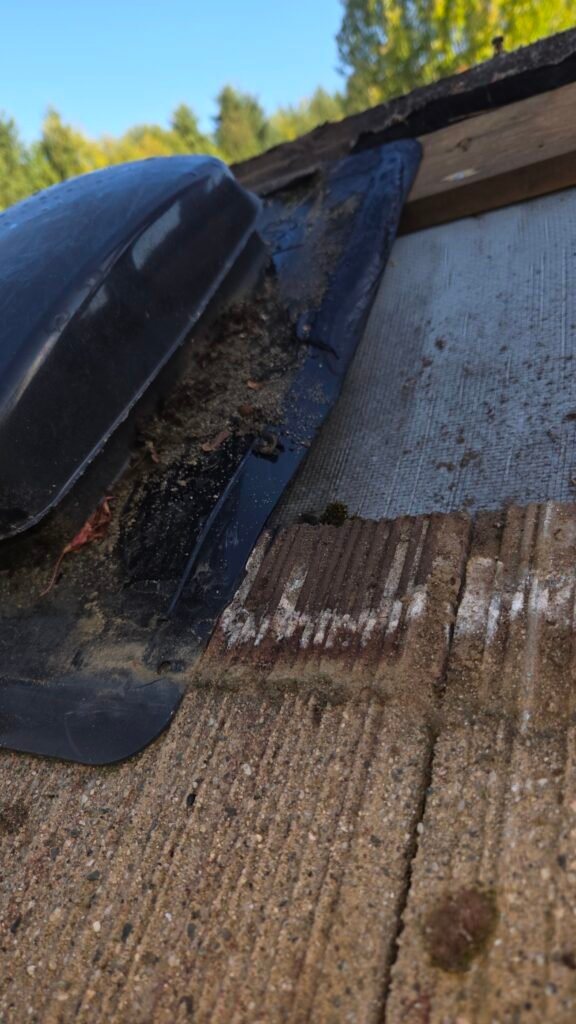
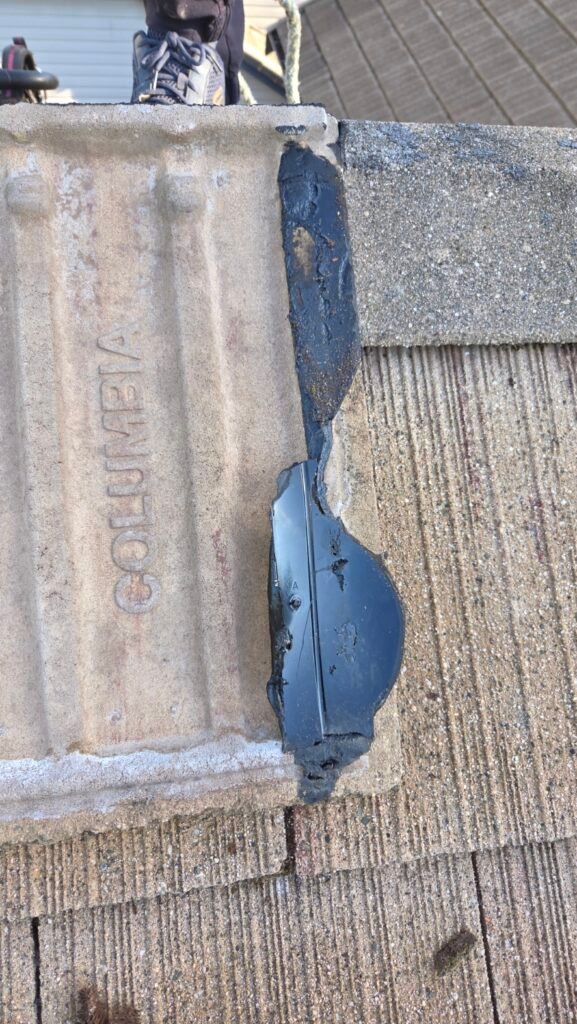
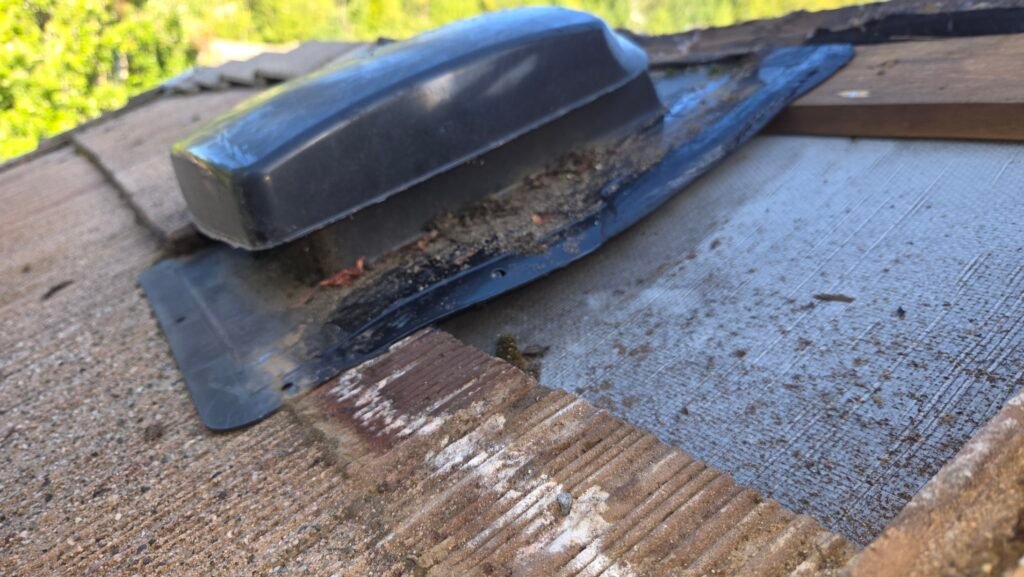
Lift the tile beside it and you can see what happened. Most of the mastic stayed on the tile. A bit of it is still clinging to the vent. But the two are no longer joined to each other, and that is all it takes.
Fresh and soft, mastic fills the gap and everything looks sealed. Then it dries out, shrinks and goes hard. When it pulls, something has to give, and it is always the weaker of the two bonds. On a tile roof that is the plastic. Now there is an open path where everybody assumed there was a seal.
You do not have to take our word for it. The vent says so itself.
Then it sags
The seal is only half of it. Look at how the vent is held up. Nailed to the battens at the back, resting on tile at the front, and nothing at all under the middle.
So the middle drops. The flange stops sitting flat and tips back toward the roof. Any water that does get past the seal is now running the wrong way, under the tiles instead of out and down.
And the plastic gets old
There is a third way these fail, and it has nothing to do with tar. Plastic sitting in the sun goes chalky and brittle. Give it enough summers and it cracks, usually at the flange where it is thinnest. At that point the seal does not matter, because the vent itself has a hole in it.
Dried mastic. A sagging flange. Brittle plastic. Three separate problems on one part, none of them anybody's mistake, and all three end the same way.
What goes on instead
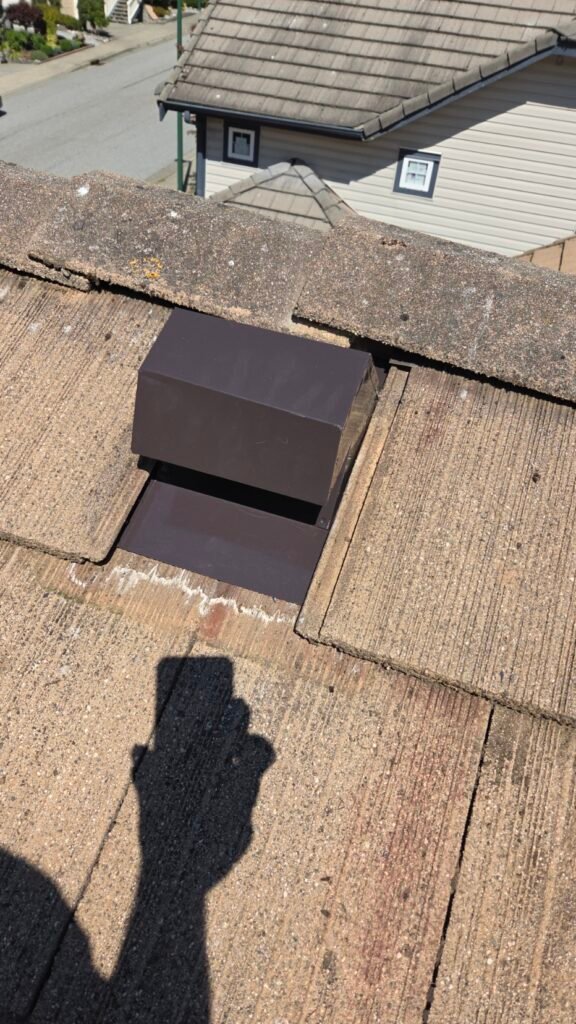
The plastic comes off and a metal vent goes on. Not an off the shelf one. Most metal vents you can buy have their seams held together with caulking, which lands you back where you started, just in a different spot on the same vent.
Ours are hot welded. The seam is made in the metal itself, so there is nothing in it to dry out and let go. It is rigid enough that it will not sag the way the plastic did, and the water is turned away by the metal instead of by a bead of sealant.
Nothing in the water path depends on a sealant, which is why one of these will last for the remainder of the life of the roof.
Worth a look from the ground
- Black mastic smeared around a vent. On a tile roof that is a repair, not how it was built.
- A vent that has dropped in the middle or no longer sits level with the tiles.
- Plastic gone chalky and grey. Brittle plastic cracks.
- Any stain on a ceiling below a vent, even a faint dried one.
Leak you cannot trace on a tile roof?
Vents are the first thing we check, and most get sorted in one visit. We work across Coquitlam, Port Coquitlam, Port Moody and the rest of the Lower Mainland.
Book a roof inspectionRelated: vents on wavy S-tile roofs need a lead flange instead, and here is our concrete tile roof repair work.