
A homeowner in Aldergrove wanted better attic ventilation, and they had already done their homework. They asked us to install a turbine vent. It was a good call. A turbine vent is one of the simplest ways to move a lot of stale air out of an attic. Here is why they work, and how we installed this one so it will not leak.
Why a turbine vent
Most roofs breathe through static vents, the little boxes that just sit there and let hot air drift out on its own. They work, but only as fast as the air feels like moving. A turbine vent is different. The turbine spins in the wind, and even a light breeze is enough to get it going. As it turns, it actively pulls hot, humid air up and out of the attic, so it moves more air than a vent that just sits still.
That matters in both seasons. In summer it pulls heat out of the attic, which keeps the house cooler and takes some load off the shingles. In winter it pulls out the damp air that would otherwise sit up there and turn into condensation, which is what leads to mold and rot. One thing to know is that a turbine only works if air can get in to replace what it pulls out, so you need good intake down at the soffits. When the intake and the turbine are balanced, the attic gets a steady flow of fresh air.
We installed a Lomanco Whirlybird on this one. It is all aluminum so it will not rust, the bearings are permanently lubricated so it spins for years with no maintenance, and the vanes are curved with rolled edges so rain gets thrown off instead of blown inside.
Cutting it in and sealing against leaks
Any time you put a hole in a roof, the real job is making sure it never leaks. I lifted the shingles in the spot, cut the hole for the vent, and set the base. Then I wrapped ice and water shield membrane around the base before anything else went back on. That membrane sticks to the deck and seals around every nail, so even in wind-driven rain the water has nowhere to get in.
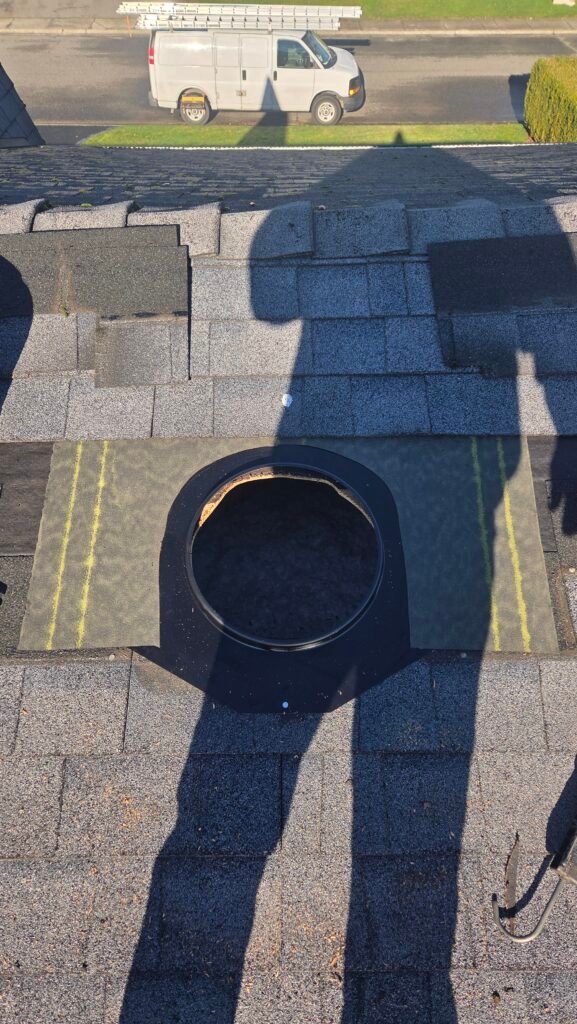
Weaving the shingles back in
With the base sealed, I worked the shingles back in over top of it. Done right, the shingles above and beside the vent lap over the base flange so water always runs down onto shingle, never up against the opening. It also looks clean, like the vent was always meant to be there.
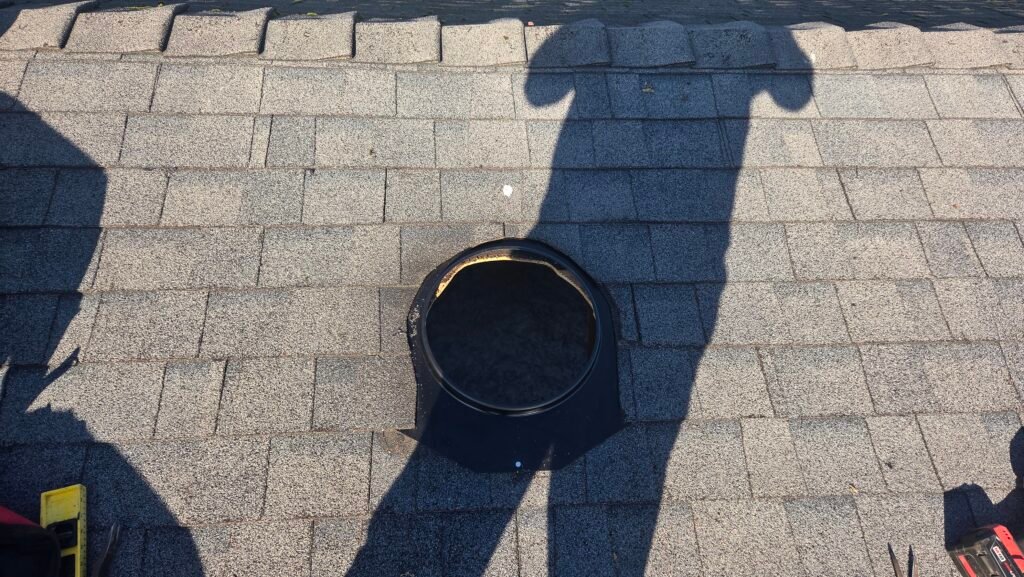
Leveling and finishing the turbine
The last step is the one people skip. A turbine has to sit level to spin freely, so I leveled the head before locking it down, caulked the inside seams, and set the turbine on top. A turbine that is off level drags on its bearings and barely turns, so this step is the difference between a vent that actually works and one that just looks the part.
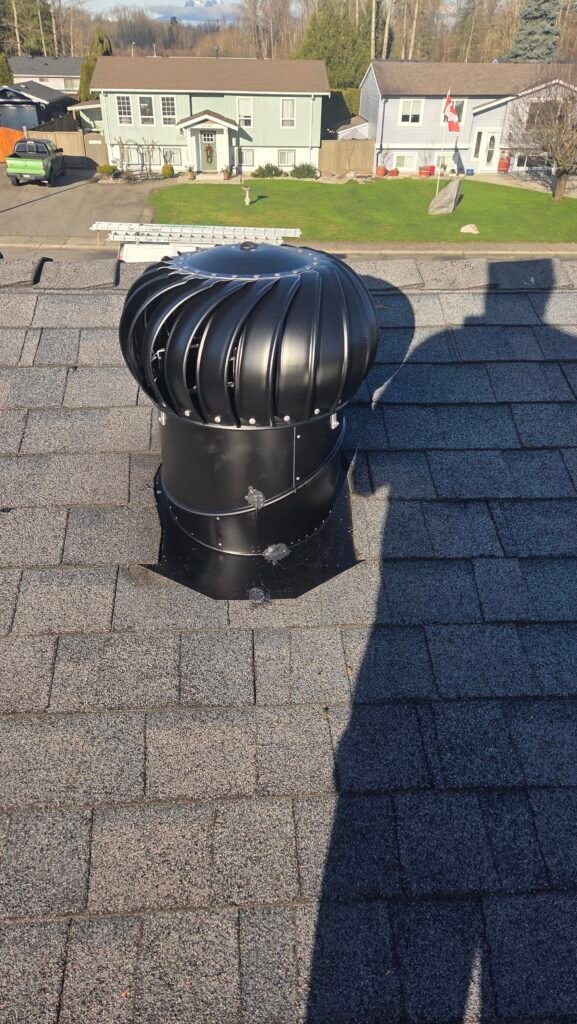
The result
The homeowner now has a turbine vent that spins on the lightest breeze and keeps air moving through their attic all year. It cost very little, it needs no power, and there is nothing to maintain.
If you want better attic ventilation on your asphalt shingle roof, a turbine vent is one of the best value upgrades out there. We install and repair roofs across Greater Vancouver and serve Aldergrove and the surrounding area. You can also read about a vent leak we fixed on a metal roof in Aldergrove. Call 778-389-5564 for a quote.